Of Ash and Steel is a classic role-playing game, where players take on the role of a simple cartographer and explore a vast world filled with mysteries and fascinating discoveries. We’ve spent enough time on Greyshaft to get an honest, unvarnished impression, and now it’s time to reveal what awaits those who decide to follow Tristan to the fifth island.
- Developer: Fire & Frost
- Publisher: tinyBuild
- Platforms: PC
- Release date: November 24, 2025
Let me start by clarifying something. This review is not written out of patriotic support for a domestic developer. I don’t consider myself one of those old-school fans who look down on modern gaming, clinging to memories of bygone legends, saying, “It was better back then.” On the contrary, I sincerely love modern RPGs. I enjoy watching the role-playing genre evolve, moving forward in different directions. And I certainly don’t think these paths are wrong.
And yet, despite modern trends and technological marvels, we—seasoned gamers who experienced the genre’s golden age—still remember that special feeling of gaming. The days of Gothic, Arx Fatalis, Risen , Fable, and other magnificent titles that formed the legacy of classic RPGs . We remember what it was like to explore the world in those titles—without countless question marks on the map, without directional markers, without flashy, super-graphics or photo modes.
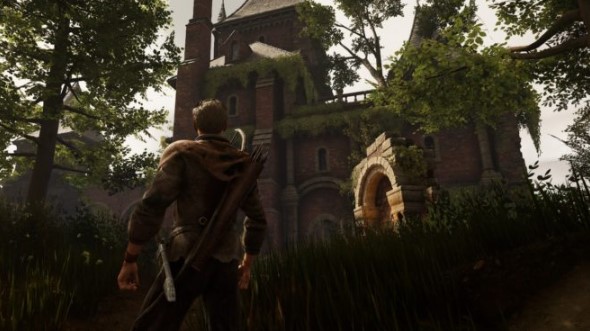
And, of course, sometimes we miss these feelings. Yes, modern titles are magnificent. But even they can’t capture the almost-forgotten thrill of exploring a fundamentally new, fantastical world, filled with surprises and discoveries. A world like Greyshaft. Where everyone speaks their native language, which isn’t visually perfect, but captivates with its compositions and design. A world where no one holds your hand, one that encourages exploration, where every effort you make is a significant building block in the foundation of character development and knowledge of the world, and not just a hastily executed side quest for useless loot and a sliver of experience.
I was really looking forward to the release of Of Ash and Steel, and I was even more upset by its delay – perhaps even more than by the delay of GTA VI . However, the game was only delayed for a few weeks, and they flew by, and now I have the opportunity to share my unpopular opinion about the project with you.
So, the kingdom of the seven islands was once held together by laws known to all and a faith few questioned. In the provinces, people lived peacefully, many even prospering; the royal guards were bored, and the merchant ships sailing between the islands sailed on schedule. Much time passed in peace and harmony. So much so that the inhabitants of the province became accustomed to the idea that order was a natural and inalienable thing. And when you get used to it, you stop looking around.
Everything was going as usual when Basalt Island suddenly fell silent. Ships and news ceased arriving , and trade was limited. Then, strange movements began to occur on Greyshaft, the fifth island. The peaceful central islands continued to exist as if nothing was happening, but rumors spread quickly and unpleasantly. It was rumored that Basalt’s governor had decided to declare independence, and the rulers of the fifth island wanted to follow suit. As a result, the king dispatched a personal detachment of knights from the Order of the Seven to investigate the situation on Greyshaft. Their mission was secret; the ship was unable to dock. To find a suitable anchorage among the reefs, rocks, and steep currents, the delegation needed an experienced cartographer—and that’s exactly the role you’ll play in Of Ash and Steel.
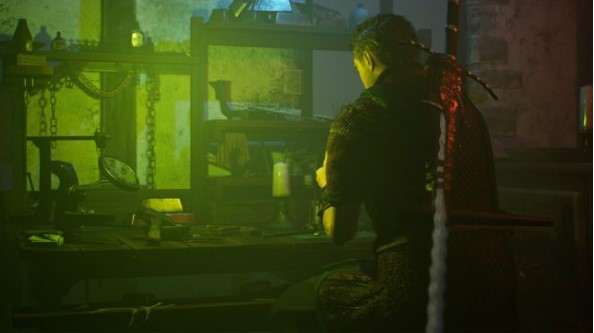
Yes, here you are no twin-sworded witcher, no assassin gliding in the shadows, no sorcerer breathing fire from his mouth. Legends and songs are not composed about you, villagers do not whisper of you in fear. Your name is Tristan—a modest, young, unassuming youth, needed only when ships begin to sink without him. And Tristan’s knowledge came in handy—the Order’s vessel approached the shores of Greyshaft without incident, but as soon as the men set up camp in the bay, the night turned into a massacre.
No one expected the attack. The bandits arrived quietly under cover of darkness and did their job quickly. Only one knight of the order survived the battle, and he only managed to hand the cartographer a letter before dying. The letter was important: it was for this purpose that the knights had sailed here, and it was destined to land on the desk of the local commander of the order. Tristan spent the night on the shore among his dead comrades, watching the ship they had sailed to Greyshaft on ablaze, and by dawn the situation had worsened.
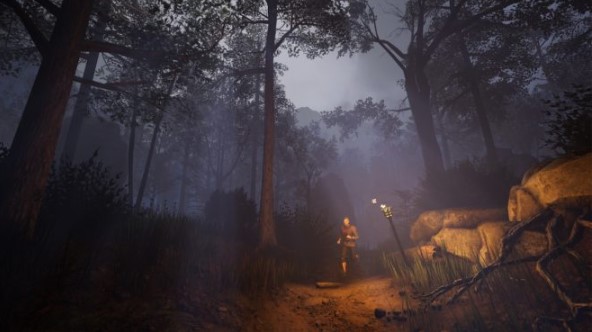
As soon as they left the coast, local marauders stripped Tristan of everything he had left. They took his letter, his money, his clothes. And he would have met his end there, if not for an old man wandering the shore in search of what the sea sometimes throws up for those who know how to look. The old man picked Tristan up as prey—not out of pity, but because that was his custom. Then, having figured out who the tide had brought him, he began to treat him, feed him, and explain everything.
The old man turned out to be more than a simpleton. He’d served with the local naval assault force, the Medusas. He might have avoided the attention of the visiting cartographer, but he did. Once he’d recovered, he made him work—carrying barrels, pulling grass, and generally helping around the house. In return, the old man showed him how to fasten clothing on a workbench, how to cook simple food, and how to choose a direction without a map. He gave Tristan some simple clothes, a dagger belonging to his dead son, and sent him on his way.
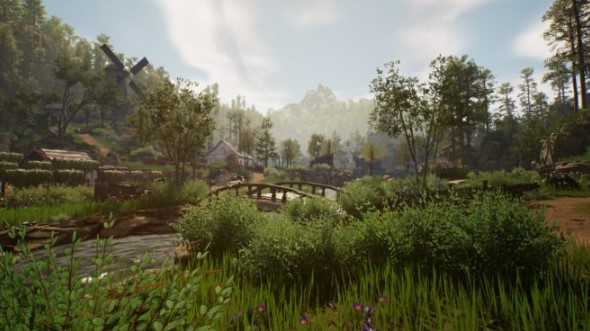
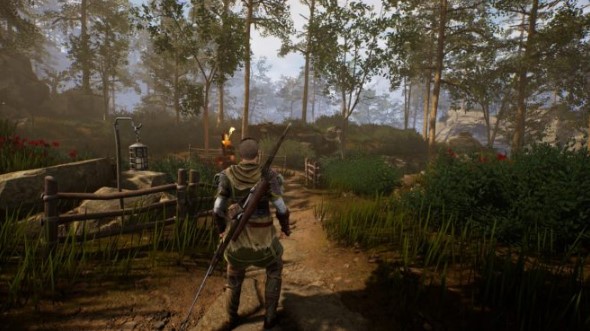
Greyshaft greets travelers with a gloomy, inhospitable beauty. Winding paths meander through dense thickets and sheer cliffs—it’s easier to get lost than to find your way. Tristan has no map, meaning any turn could lead to a place he’d rather not be. The local fauna is anything but peaceful: beetles and bees the size of mongrels, seasoned wolves and ratmen, goblins , basilisks, and horned beasts resembling bears. Marauders prowl the forest’s depths, bandits and poachers camp in secluded spots—you’ll encounter all sorts of creatures here. And most of them are impossible to deal with on the fly.
However, there are also peaceful souls. A lost merchant will emerge from around a bend, a hunter will appear. Templars, guards, thieves , artisans, ordinary islanders without a specific trade but with their own goals and secrets. Some beg Tristan for help, some offer dubious deals, and some even lure him into a trap—to rob or even kill. The named characters are colorful, most are pleasant to chat with, and many offer experience and knowledge.
The main quest takes Tristan to the capital, the city of Greyshaft, named after the island itself. I managed to reach it only after seven hours of wandering. We spent several nights camped out in the open, foraging for food and thanking fate for the torches we found in the ruins. We spent another couple of nights at a roadside inn near a watchtower, where we met its motley crowd. Not far from the capital, the game even offers to hire a guide—the roads become more numerous, and dangerous enemies become more frequent.
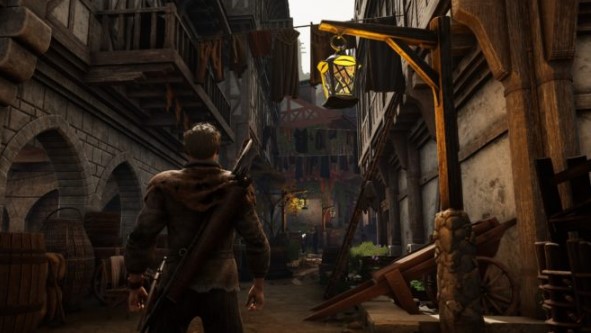
Greyshaft itself is a colossal, labyrinthine city whose heyday is long gone. The rough stone buildings are sturdy but neglected. There are many people, but most are idle— there’s no work . The guards are irritable and not above robbing visitors. You constantly catch the suspicious glances of the shady townspeople, accustomed to surviving as best they can. They might cut your wallet or even spit in your face—simply for being an Astarthian. Or they might stab you in an alleyway if you’re wandering around at night. Spacious, tangled, and gloomy, Greyshaft leaves an oppressive impression.
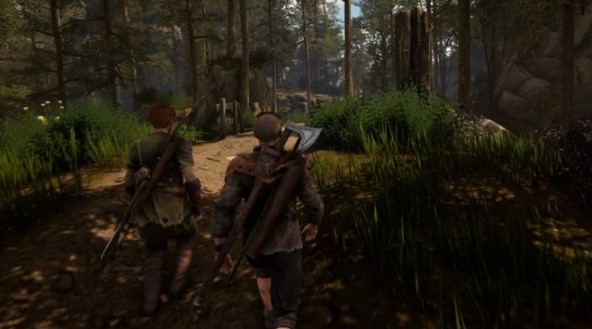
At some point, the player realizes there’s no escape from the island. The “darkness” will soon begin—a time when poisonous ash falls from the sky. No captain will risk setting sail during this period. Tristan will have to wait out the “darkness” on Greyshaft. Having barely survived yet another plot-related assassination attempt right in the capital, the cartographer decides to enlist someone’s help. The choice is limited: either swear allegiance to the local knightly order or join the free hunters.
Of Ash and Steel is woven from vibrant, engaging interactions. Miss a detail in a conversation with an NPC and you lose a grain of experience. Every minor errand, every dialogue line, every risky action or kill, even every book you read —everything is rewarded with experience. But even more importantly, the locals, literature, and your own observation become your guides into the world of Greyshaft, about which you initially know absolutely nothing. Stories gleaned during your journey reveal the island bit by bit—its inhabitants, creatures, flora, and countless details, all adding up to a living, breathing lore, just like in classic RPGs.
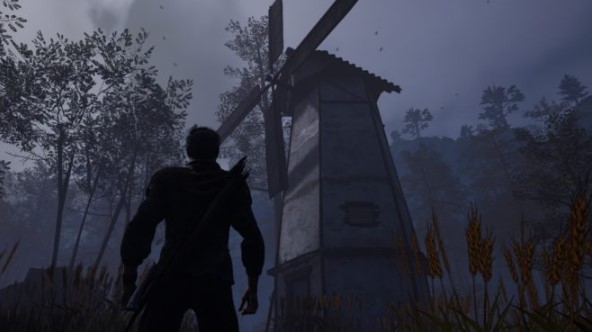
Tristan, though inexperienced, is agile. He jumps high and runs fast. However, when sprinting, he can trip over a puddle or a branch and fall to his death. The developers worked hard to create realistic body and head physics . Tristan is a beautiful swordsman, especially once he gains some experience. The facial animation may be a bit lacking in places, but that’s forgiven for the other little details. For example, the number of arrows in the quiver exactly matches the number in the inventory.
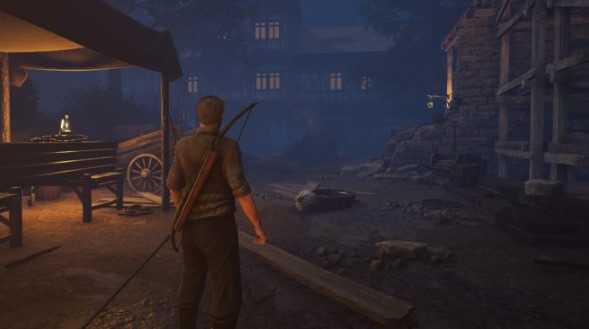
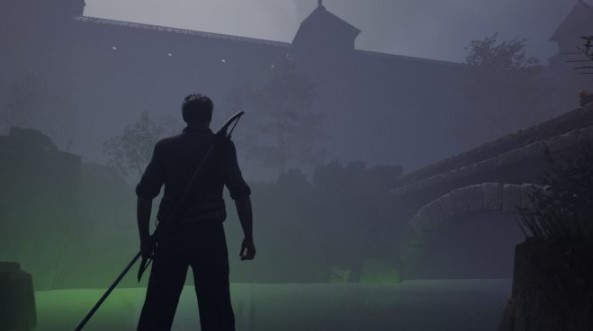
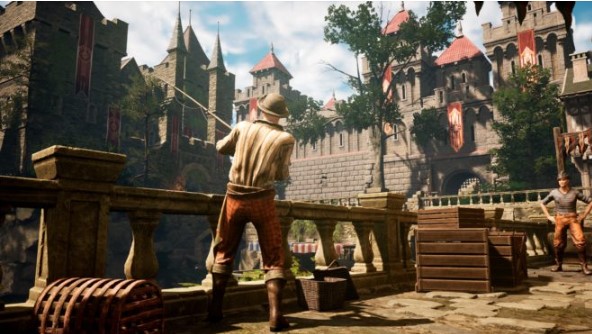
I’ve heard many criticize the visuals, but within the confines of its concept, Of Ash and Steel looks rich and varied. The lighting is superb, the textures are pleasing to the eye, the weather effects and ambient sounds are enveloping, immersing you in the world meticulously crafted by the designers. The game is conceptually faithful to old- school RPGs —and therein lies its charm. This isn’t a classic reimagined for a modern audience, but a classic that looks noble thanks to its technical capabilities.
With each level, Tristan gains three stat points and one skill point, unlocking combat and non-combat abilities. However, learning these abilities requires finding a suitable teacher and forking out a considerable sum. A cartographer can only master a skill if their stats meet the required requirements.
Skills are divided into three branches: survival , crafting, and warfare. The survival branch is a hybrid of the prepper and rogue paths, with an emphasis on agility. Here, you learn skinning—without this skill, leatherworking is unavailable—as well as basic crafting skills for crafting certain items. Lockpicking and pickpocketing are unlocked . Many crafting professions are tied specifically to this branch, but there are also plenty of combat abilities: lacerations that cause bleeding, throwing daggers, poisoning the blade , and even using improvised means—the hero can hurl bottles, barrels, or cobblestones at enemies.
The Crafting tree is more modest in terms of skill set, but no less important. Basic crafting unlocks access to other crafts. Here, you learn how to mine ore (though you’ll need a pickaxe), fortify armor, sharpen weapons, and work with metal. This tree requires insight and fortitude, but also considerable strength.
The War tree, when first explored, provides basic military training: a powerful strike is unlocked (the hero is incapable of powerful attacks by default) and melee damage is increased by five percent. This tree focuses on combat skills: parrying, two-handed and one-handed weapon mastery, new fencing techniques and combinations, and increased damage for specific weapon types. A variety of combat techniques are available, such as the Achilles Strike—an ideal move for critical damage that is unblockable—a flurry of blows, kicks, shoulder strikes, and much more. This tree requires a significant investment in strength and fortitude.
In addition to the main skills, there are passive ones that unlock when certain conditions are met. There are over a dozen of them, divided into three branches: Sense of the World, Will to Live, and Rare Ancient Knowledge. Some are hidden and not immediately obvious. For example, slip and fall a certain number of times, and the hero gains the “Nimble Feet” skill and stops stumbling while running. Land the required number of light strikes, and you gain a bonus to stamina and the “Fencer” skill. Eat twenty carrots, and you permanently gain a +1 bonus to Insight. And so on.
By the way, you can earn permanent stat bonuses by killing alpha mobs, drinking special potions , and upgrading your home. Yes, there’s your own home, bookstores, a junk shop where you can borrow money, and much more.
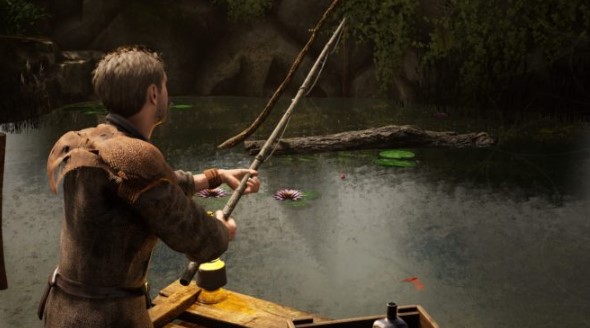
Peaceful pursuits include a whole arsenal of crafts, each requiring attention and specific tools. Leatherworking, for example, is impossible without a tannery, where animal hides , obtained through survival skills, are transformed into cloth and leather—with leather being much more valuable. Fishing is a complex but important craft. Fish is much easier to obtain for food than other foods.
Forging requires an anvil—here, a character can craft any melee weapon using generic blueprints, provided they have the basic mastery skill. Furthermore, they can forge the unique sword “Pride of Tantaros,” crafted to their own specifications, but to do so, they must first find Tantaros’s treasures and possess the Master Smithing skill. There’s a workbench for crafting consumables, ammunition, tools, and clothing—though crafting anything requires blueprints. There’s an alchemy table for potions. There are campfires for cooking. With the right skill, the character can set up camp to spend the night and conjure food.
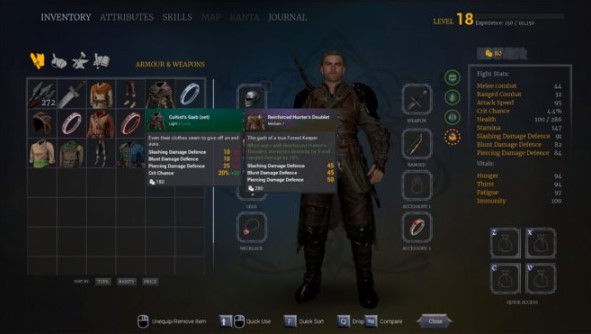
A character has hunger, thirst, fatigue, and immunity stats that require attention. These needs are weighted differently depending on the difficulty level: on Hard, you can easily starve to death, while on Medium—the most balanced—you’ll receive debuffs and buffs depending on your condition. A well-fed hero’s maximum health increases, and if you’re not thirsty, your stamina increases by 10 percent. A well-rested hero’s melee damage increases by 10 percent. You also get additional buffs from cooking food over a campfire.
Many mechanics in Of Ash and Steel are implemented with a pleasantly old-fashioned thoroughness, especially the quest system—it truly doesn’t hold your hand. There are no markers on the map. And the map itself won’t appear anytime soon, so Tristan will have to draw it himself. You stumble upon a camp with bloody footprints—clearly something happened, but sometimes the journal won’t even record a hint like “figure out what happened to the camp.” Search around, take a closer look—you’ll see that the bloody trail continues. It’s difficult to notice or distinguish, but if you’re observant, you can follow it. And it will lead to something interesting—to experience, to knowledge, to new acquaintances.
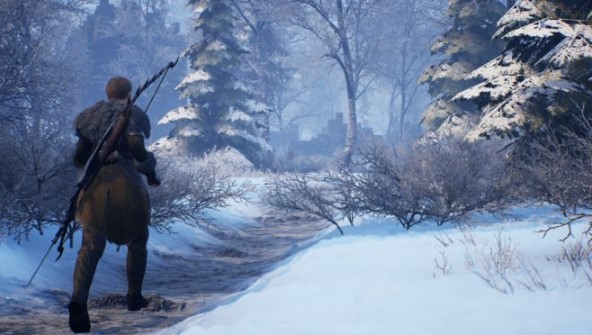
The combat here also has an old-school feel and is quite brutal—though it’s no Dark Souls, a certain amount of skill is still required. Stamina management, well-timed counterattacks, the ability to wear down an enemy and strike at the right moment. The ability to retreat at the right time or use the environment to outsmart the enemy or lure them to a place where they’ll be easier to deal with.
Micromanagement is merciless—you have to constantly monitor your food and water supplies. Health doesn’t regenerate automatically: you need to gather herbs, rummage through barrels, brew potions, and spend them wisely—too much consumption will leave you empty-handed at a critical moment. Nighttime wanderings require torches, though wandering in the dark itself is a risky endeavor. It’s wiser to find shelter—an inn or an abandoned house.
But if you do decide to walk at night, a torch is essential, if only to see the road beneath your feet, and torches are consumable here. Gold isn’t just lying around, and you need a lot of it: merchants sell recipes and rarities, and leveling up each skill takes a toll on your wallet. In short, you have to carefully weigh every decision and appreciate every coin, every opportunity to win something. Here you need to memorize roads, study the terrain, run back and forth, and keep a mental map of the surrounding area—just like in the good old days.
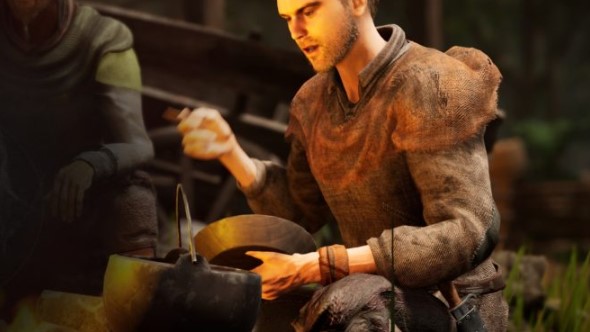
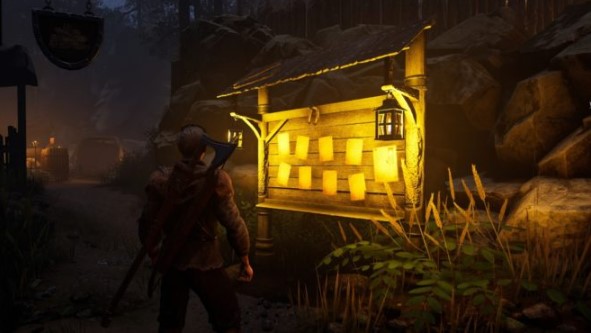
Settlements and outposts are outfitted with noticeboards, just like in The Witcher. All notices are readable—they expand on Greyshaft’s lore, suggesting interesting places and people worth talking to. Again, no map markers, no journal entries. If you’d like, take the noticeboard home, reread it at your leisure, and try to find the place where the worker is being sought.
While gwent was the favorite pastime in The Witcher, here it’s runt. It’s a whole philosophy of fistfights and street brawls. Players can also participate in runt by placing a hefty gold bet and earn a decent payout if they defeat their opponent. Fistfighting has its own mechanics: in runt, you need to knock out your opponent, reducing their health bar to zero, while remaining on your feet. At the start of each fight, the player receives attack and defense points (and so does the opponent). Attack points are spent on attacks to different parts of the body, each with a different effect. Defense points allow you to block or parry attacks from different directions. By combining normal, piercing, and power strikes, as well as blocking and counterattacking, you engage in a turn-based duel in the spirit of Fight Club. At the same time, you build up Focus, which unlocks cards with special abilities. For victories, in addition to gold, the player earns new moves and, over time, combat stances. It’s a turn-based, semi-CCG, quite an engaging experience.
The sad part is that even after the port, the game hasn’t been polished to perfection. Too many things work incredibly poorly, and this is perhaps its main flaw, which truly mars the overall experience. You want to immerse yourself in the atmosphere and enjoy the process, but the game constantly throws a spanner in the works: you’ll get stuck in textures, an enemy will freeze, a quest item will vanish from your inventory, or the quest character you need to talk to to complete a quest will disappear. Or they’ll send you out to crush bugs, and you’ll kill every single one, but the quest won’t count.
There are plenty of such rough edges, and broken quests are a serious problem for a large-scale RPG of this caliber. Numerous mechanics work unsatisfactorily, and this undoubtedly significantly undermines interest in the game and dampens the desire to continue. Especially since exploring the world truly takes a lot of time—just wandering around Greyshaft is enough: you’ll go crazy trying to learn the city without a map, memorizing which shops are where, which people are where. And when quests refuse to work, that’s, of course, extremely frustrating.
Of Ash and Steel is designed for the sake of the experience itself, with every step and every quest a crucial part of the journey. It’s stubborn, sometimes rough, but also incredibly engaging. Much of Greyshaft is structured differently than modern RPGs: here you genuinely have to observe, remember, draw conclusions, and unravel the tangled web of stories. And when everything comes together, when your efforts pay off after several hours of gameplay, a connection is forged with the old worlds where player curiosity and hard work were at the core of everything.
But just as often, the game trips you up. Technical issues, unfinished mechanics, ridiculous bugs—all of this often throws you off track. Respect for the developers’ ambition and scope mingles with irritation when yet another quest falls apart or the hero gets stuck in a rock. You’re caught between delight and hatred and back again, unable to quit. Despite these unfortunate flaws, Of Ash and Steel is a very, very good game. If the developers manage to bring the game to the state it absolutely deserves, we’ll get a truly solid and distinctive RPG.
- Beautiful and picturesque, with excellent sound
- A large and interesting world to explore
- Lots of activities, interesting crafts and fist fights
- Slow but engaging progression
- There are a lot of technical problems
- Not all tasks meet expectations