Few online RPGs have aged as gracefully as Guild Wars. Released during an era dominated by subscription MMORPGs, it captured audiences with its familiar distribution model and expansive story campaigns. Twenty years later, the game has aged considerably, and today’s gaming community may not even know it existed. Guild Wars Reforged was released to recapture the audience’s attention. Did it succeed? Find out in our review.
Guild Wars: Reforged is a remaster of the original Guild Wars, focused on preserving the original campaign structure and core mechanics. The project does not reimagine the genre or attempt to change the fundamental systems of the original. Its goal is to update the game’s technical state and make the content accessible to a modern audience.
The original Guild Wars relied on solutions unique to the mid-2000s: an instanced world structure, a party-based playstyle, fixed campaigns, and build-dependent tactical combat. These features defined the game’s style, but also made it vulnerable to staleness. Declining player numbers, complex hero management, and uneven campaign quality are factors that inevitably confront anyone returning to the project today.
A game-breaking remaster
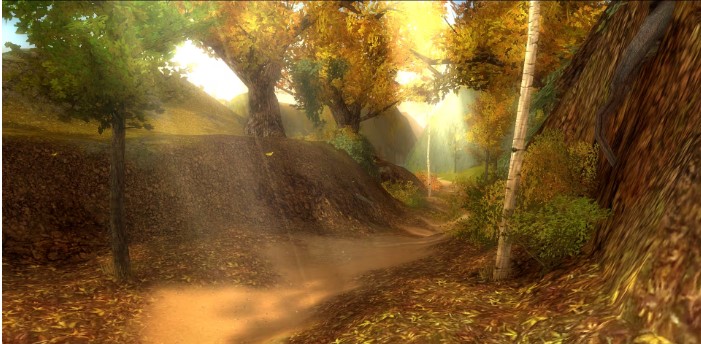
The main goal of this remaster is a technical overhaul. Much of the work focuses on image clarity. Textures appear sharper. Lighting and shadows are now deeper, more contrasty, and rendered more accurately. The only thing the developers haven’t touched is the character and object models: they’re still blocky and lack a high polygon count. Therefore, the new image on the old frame can feel unnatural.
The interface has also been redesigned. The original version was designed for low-resolution monitors, causing elements to appear small and blurry on modern screens. In Reforged, the text and icons have been fully adapted for larger screens.
The audio has been updated following the same principle. Jeremy Soule’s music and voiceover remain original, but the background effects have been reworked: water flows, weather events, and environmental sounds have been re-recorded, producing a much clearer sound.
Technical upgrades have also improved stability. The remaster loads faster and doesn’t suffer from memory leaks or frame rate drops. And all these benefits don’t require a hardware upgrade! An Intel Pentium, a GeForce graphics card, and 4GB of hard drive space are sufficient for the remaster’s smooth operation. Furthermore, the remaster runs perfectly on Steam Deck and is even optimized for gamepads, as much as possible.
20 years of unchanged gameplay
Guild Wars: Reforged retains the original structure without revising its mechanics. The core of combat remains a skill bar with eight skills, each with an activation time and cooldown. The hero still fights independently using auto-attacks. Skills function identically to the previous version, with their interactions and synergies preserved. The remaster doesn’t change the balance or introduce any new rules—the changes focus solely on usability: effects are displayed more clearly, the interface provides clearer feedback, and the tutorial explains the basic mechanics in a straightforward manner.
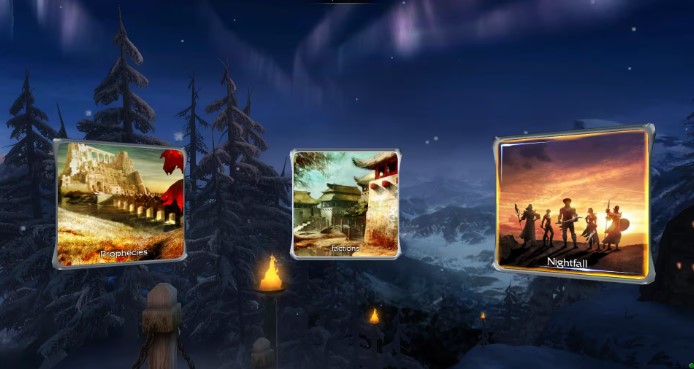
The game features four full campaigns: Prophesies, Factions, Nightfall, and Eye of the North. Each campaign represents a separate, large region with its own story and mechanics. You can play them in any order; the only difference will be the opening dialogue that introduces your character’s backstory.
But the campaigns themselves feel uneven. Prophesis’s plot is too drawn-out and lacks narrative depth. Factions requires a lot of grinding and completing every possible quest to complete the branch. Nightfall is considered the best, with an engaging story and powerful enemies.
The open world in Guild Wars: Reforged is structured around zones, similar to Diablo or Path of Exile. Towns and outposts serve as social hubs: players gather there, form groups, trade, and build builds. However, after leaving the hub, each game session becomes an instance, created individually for the player and their group.
The game’s key element is its party model. Content is designed not for a single character, but for a group of four to eight participants. When no real players were present in a location, they were replaced by mercenaries or heroes. The former operate autonomously and require minimal control. The latter allow for manual customization of skills, equipment, and behavior, making them effectively fully controllable combat units. Many players play through the entire game with a fully customized squad of heroes.
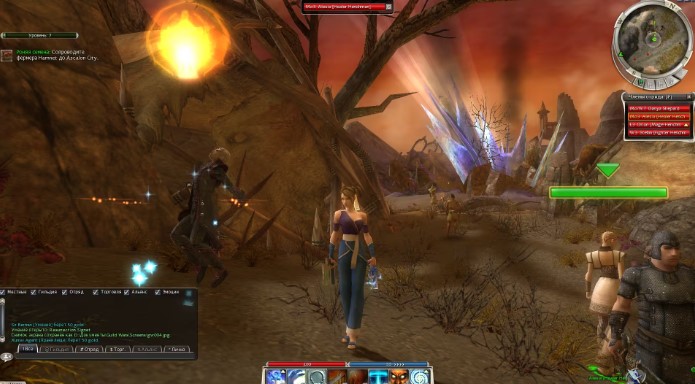
The main focus of this group management was build-building. The skill system limited the number of active abilities, forcing players to assign roles, optimize synergies between party members, and consider enemy composition. Massive grinding was also absent: no key objective required endless farming—this distinguished Guild Wars from MMOs of its era and brought it closer to a tactical RPG than classic genre representatives.
Diagnosis
Guild Wars Reforged doesn’t attempt to reimagine the original—it’s like a meticulous restoration of an iconic structure. The developers haven’t changed the gameplay or attempted the kind of reinvention that other remake-remasters like to claim. Instead, Reforged takes the classic MMO and imbues it with the clarity, stability, and accessibility needed to ensure it can be enjoyed for another decade or more.
For veterans, the remaster is a tribute, not just nostalgia. For newcomers, it’s the best opportunity to discover what made Guild Wars a genre-defining game. And for the industry as a whole, it’s a reminder that some games don’t need a reimagining to remain timeless. They just need to be well-represented.