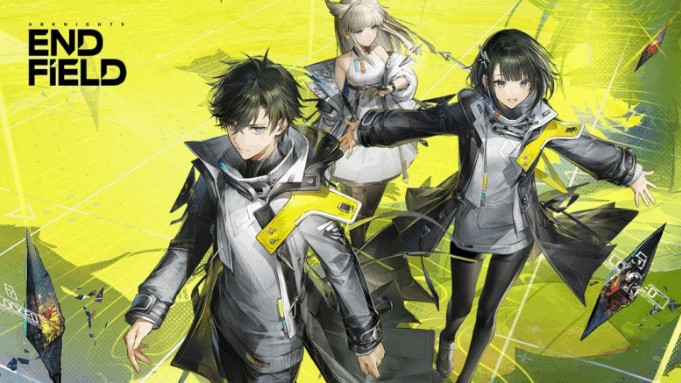
The developers of Arknights: Endfield have successfully adapted the popular mobile franchise into a full-fledged game for PC and consoles. Hypergryph’s tactical focus was sacrificed in favor of a sprawling sci-fi world, complex interconnected systems, and a rich experience where action, management, and storytelling work seamlessly together. Surprisingly, their project has managed to seriously compete with gacha giants like Kuro Games and HoYoverse. Let me explain.
- Developer: Hypergryph
- Publisher: Gryphline
- Platforms: PC, PlayStation 5 , Android, iOS
- Release date: January 22 , 2026
Arknights: Endfield takes place on the planet Talos II, where Endfield Industries has sent an expedition to colonize and develop the planet. The protagonist, a straightforward character called Endministrator, suffers from amnesia, but gradually, as the story unfolds, he learns about his past and his former achievements.
The plot is presented in a manner typical of the genre: rich terminology, fragmented dialogue, and a gradual unfolding of the world, including political, technological, and social conflicts. You’ll soon gain a general understanding of the challenges and threats the colonists face. Remarkably, a significant portion of the dialogue can be skipped without losing the overall narrative thread, thanks to brief summaries.

As a sci -fi fan, Arknights: Endfield captivated me with its visuals. I didn’t expect such a high level of visuals from a spin-off mobile tactical game. The style is anime-inspired, but the environments, lighting, and detailed characters and effects allow the game to compete with major online RPGs.
As you progress through the story, you’ll discover diverse regions with memorable landscapes, industrial zones, settlements, and technological complexes. Cities and bases are filled with NPCs and numerous small, eye-catching visual details. Production facilities, power lines, processing stations, and defensive structures blend seamlessly into the landscape, emphasizing the theme of industrialization in a hostile world. The game is also technically superbly optimized—even on a low-end PC, it can run stably at 60 fps.

The gameplay is based on real-time combat, exploration of semi-open locations, construction systems , and production chain management. Combat revolves around controlling a squad of several “Operators” present on the battlefield simultaneously, with the player able to switch between them.
Each Operator has basic and enhanced attacks, an active skill, an ultimate ability, and a combo skill that triggers when certain conditions are met. For some characters, this might be a series of regular attacks, while for others, it might involve specific effects or interacting with a specific enemy state.

Damage in the game is divided into several types, and each of these types can inflict negative status effects on an enemy. Even physical damage causes special effects, allowing another character to subsequently perform enhanced moves or additional attacks.
Combat is built around synergies, skillful status management, timing, and skill sequencing. It’s unusual at first, but over time, combat becomes enjoyable. However, the AI allies you don’t control can only perform basic attacks.

The game’s narrative is largely built around the Operators. They have distinct personalities, backgrounds, and motivations. Some receive their own storylines and quests that further their stories. The character designs are part urban, part sci-fi, which sets them apart from the fantasy- oriented gacha games. Incidentally, for fans of the original Arknights, the game is full of references. At the same time, it’s quite independent, so you don’t necessarily need to have played the original game to experience the world of Arknights: Endfield.
The second, and most unique, layer of Arknights: Endfield is industrial construction and base management, reminiscent of simplified versions of games like Satisfactory or Factorio. Players can construct mining complexes and refineries, organize energy infrastructure and defensive structures, and build fully-fledged production chains. The development of these systems is closely linked to world exploration , as new types of buildings and upgrades are unlocked as you progress through the story and explore regions.

Player factories require well-thought-out logistics, intelligent energy management, and optimized resource flows. Although they will ultimately operate largely automatically, the process of setting them up and expanding them can be immersive for hours. There are even tower defense elements, requiring you to fend off attacks on bases and production nodes.
All systems—combat, exploration, construction, and hero progression —are linked into a single economic model, centered on gacha mechanics. Operators, their weapons, and a significant portion of progression are tied to acquisition through banners, upgrades through duplicates, and the collection of large quantities of resources. To fully unlock a hero’s potential, you’ll need not only to level up and master skills, but also to obtain multiple copies and the appropriate weapon.

The game features basic resources, rare materials, special tokens for specific modes, and premium currency for banners and battle passes. Technically, most of these can be earned through gameplay without any need for donations—the monetization system doesn’t yet appear overtly aggressive.
Among the less-than-ideal features, I’d like to point out the cluttered interface and the vast number of menus. The game has several layers of nested screens, quick accesses, and submenus, and sometimes finding the right function, whether it’s upgrading equipment or customizing a squad, takes longer than you’d like. To top it all off, there are plenty of tutorial windows and tooltips. The game strives to explain every mechanic in detail, but so persistently that tutorials keep popping up even after ten hours. Frankly, this aspect is a bit tedious.

By mid- and late-game progression, gameplay increasingly boils down to routine cycles: daily activities, events, resource farming, banner scrolling, and optimization of production lines to speed up progress. Combat, exploration, and construction gradually fade into the background, serving primarily the gacha economy. However, this likely won’t come as a surprise to gacha game fans.
Arknights: Endfield left me with mixed feelings. On the one hand, it’s very stylish, atmospheric , and technically robust. I liked the characters, and the setting is magnificent. And it combines action , simulation elements, and a service-based model surprisingly well . On the other hand, the inevitable dominance of gacha mechanics in the late game and some flaws in the interface design dampened my enthusiasm somewhat.
The game is addictive, engaging, and charming, but it constantly reminds you that behind all your progress lies a long-term service structure with mandatory grinding , daily routines, and tinkering. Nevertheless, Arknights: Endfield deserves your undivided attention. Especially if you’re already an experienced player of this type of game.