PIONER was released four years later, but instead of a hit, we got a broken MMO. We’ll explore why this long-running project isn’t worth a minute of your time.
I look at PIONER not only as a casual player, but also as a participant in closed beta testing and interacting with the development team. In the early stages, we were promised stable funding, international partners, and a powerful server infrastructure. Today, these promises are shattered by reality. The parallels with The Day Before are obvious: the only difference is that that project collapsed in a matter of days, while PIONER continues to exist in a highly controversial form.
Marketing deserves special mention. Initially, the game was promoted by industry journalists and streamers genuinely interested in the project. After coming under Rostelecom’s wing, the focus shifted: PIONER began to be promoted by media personalities known for promoting bookmakers. This demonstrates a shift in priorities—from target audience engagement to simply budget allocation.
Moreover, the studio abandoned the Steam audience (where the game had around half a million wishlists) in favor of exclusivity on Rostelecom Games. The result is a peak online audience of around 1,500 players. This gap between expectations and reality raises concerns about wishlist manipulation during the promotional phase.
The team’s response to criticism is chaotic: some issues are fixed, others are ignored or exacerbated with patches. It seems the developers either don’t understand the root of the problems or consider the current state of the game to be normal. This article isn’t just a review, but an analysis of the discrepancy between promises and reality.
Playing on “slow” servers
We have a technology that handles network interactions, which also handles voice chat. Without going into technical details, it’s the same technology used in Riot Games’ Valorant. That means it’s designed to handle very high loads. So, everything is more or less OK with it.
The release was marked by a technical glitch. Sales were delayed by several hours, but even then, the servers remained down until late into the night. At launch, only the prologue worked, thanks to its autonomy. Loading the first hub location, Wandering Pass, greeted players with black screens and crashes. Some of the glitches have been fixed, but the risk of crashing when transitioning between locations remains.
Despite claims of a robust architecture, the servers couldn’t handle even a modest influx of players. Furthermore, the game’s chats are virtually non-functional. It’s suspected that voice and text chat were intentionally disabled to avoid data storage issues under the “Yarovaya Law” (a similar situation occurred in League of Legends and Roblox).
The result is a breakdown in teamwork. Players are forced to communicate by shooting at walls to direct their path. This is a death sentence for MMOs.
Network lag is comparable to Escape from Tarkov, but in PIONER it’s more noticeable. Hit registration often occurs with a half-second delay: you empty the magazine, but the damage is delayed. This is annoying in PvE, and game-breaking in PvP.
It’s practically impossible to evaluate the PvP component in its current state—the servers are empty. Online participation is so low that any conclusions are theoretical. This is especially noticeable in Arena mode. Players simply don’t join. Users are left alone in the lobby, waiting for a team to fill. The standard waiting timer is about an hour, after which the player is kicked from the server. However, sometimes a bug can occur that allows players to exceed this limit and remain in the queue indefinitely.
Besides the arena, there’s an extraction shooter equivalent (the “Dark Zone”). This is a separate zone where players can collect loot, battle each other, and complete objectives. The map has about a dozen points of interest: resources for crafting, repairs, and experience. Theoretically, this is a key area for PvP, but in practice, it’s unused. You’re unlikely to encounter another player in dozens of runs. The value of the loot is questionable: the resources there are the same as in more relaxed PvE locations. The risk system is implemented in a formal manner: upon death, the player only loses the items they’ve collected, not their equipment. There’s no tension.
The situation with dungeon finders, known locally as “raids,” is slightly better, but there are still plenty of issues. Matchmaking works, but the average wait time is 10-15 minutes. Furthermore, the group matching system is malfunctioning. Players may be sent to the wrong raid. There are only two dungeons in the game, and choosing a specific raid doesn’t guarantee entry. This is likely an attempt to reduce queues.
All this is exacerbated by the lack of anti-cheat software. Cheaters clear raids in minutes while honest players wait at the finish line. In a full-fledged PvP environment, this would be disastrous, and the low online rate acts as a sort of salvation. Reporting cheaters is also impossible: the report interface is broken, buttons are unpressable, and the cursor disappears.
Is this really your “home base”?
The plot has changed little since the tests. It’s only been expanded: while the narrative previously ended during a solo raid, now the story formally progresses. This hasn’t brought about a significant shift in quality. The player still assumes the role of the “chosen one,” who survived an anomalous surge—the “Tide.” The main intrigue revolves around the character’s survival and their role in the conflict, but these themes are barely explored.
The list of factions has also expanded. In addition to the previously known “Initiative” and “Trade Union”—two neutral organizations—three more sides to the conflict have appeared in the game:
- The Brigade is a militarized group interested in complete control of the island and the restoration of Russia’s territorial integrity;
- The Conglomerate is a faction of local savages whose main goal is to expel all outsiders;
- The Twilight is a villainous faction that acts as a key antagonist, regularly attacking settlements and interfering with the player’s actions.
The faction structure here serves more than just a plot function. Players can join them, and they will issue missions that can be completed to advance their careers. Furthermore, factional rivalries are clearly demonstrated in disputed territories, where wars and skirmishes between players are permitted.
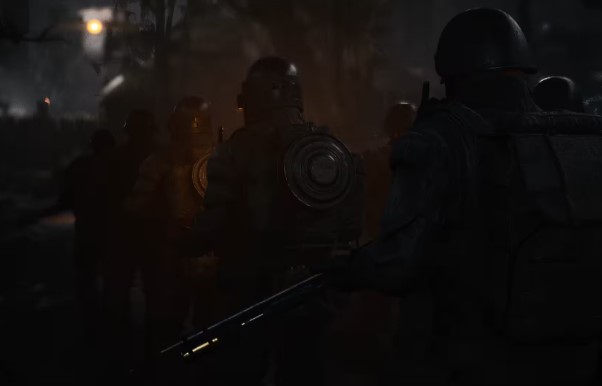
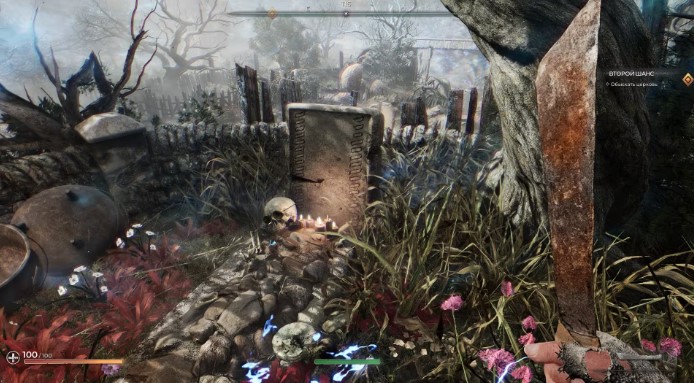
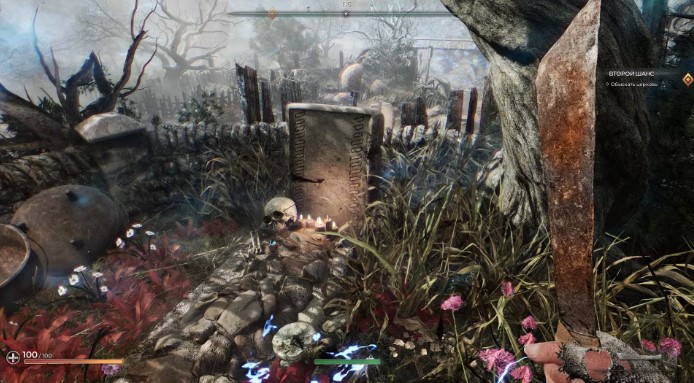
Visually, PIONER is reminiscent of Fallout 76: rusty tones, wild nature. However, there are no recognizable Soviet or post-Soviet cities with typical buildings. The world looks cohesive, but like a makeshift civilization made from scraps, derivative.
The main problem with the plot is its incompleteness and the laziness of the writers. For example, according to the plot, all the residents of Wandering Pass suddenly lose their memory of how they fought off the siege of the town. This is an official plot device, justifying the lack of changes to the location and new dialogue. In contrast, the side quests stand out: gangster showdowns and local stories are written much more vividly: help an old man dig up treasure, rescue a scientist from the clutches of bandits, or help find the code to a safe—and so on.
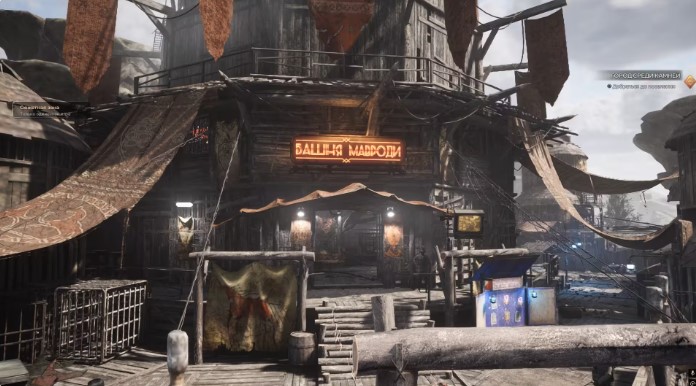
Single-player MMO
PIONER is a typical MMO project. The gameplay loop revolves around leveling up and finding gear. The former is achieved through grinding mobs and quests, the latter through dungeons and level-up rewards (for example, at level 10 you get rare armor).
Leveling up boils down to unlocking perks. The skill tree consists of sets of small chains for specific mechanics: trading, crafting, medicine, anomalies. In practice, the system works poorly. Skills are too narrowly specialized and situational, making it impossible to assemble complete builds. Most perks don’t affect either damage or survivability, so leveling up doesn’t provide a noticeable increase in power.
The open world now features four locations with varying threat levels. Gameplay quests are typical: find, interact, and clear. Each quest takes 10–20 minutes to complete. Many quest zones are artificially isolated by barriers: access is only possible with an active quest. Access remains blocked before and after completing it.
The world events added at release are unplayable: enemies spawn endlessly, there’s no cover, and the forced shooting makes melee weapons useless.
The combat system suffers from drawn-out animations. Healing and using items take too long for a fast-paced MMO shooter—while the character finishes the animation, enemies have time to close the distance and finish the player off. PIONER tries to borrow approaches from tactical simulators, ignoring the fact that the pace and intensity of combat here is significantly higher.
The same applies to interactions with anomalies: instead of a quick bolt throw, a lengthy “core” animation is used, leaving the player vulnerable. As a result, basic interaction with the environment becomes a drawn-out and unsafe process that punishes the player not for making a mistake, but for the very fact of using the intended mechanic.
But the main “activity” in PIONER is walking. Locations are sprawling, with few teleportation stations. After death, the game offers respawning at the entrance to the quest zone (with a repeat mission) or at the nearest outpost, which might be a kilometer away. In both cases, it’s a waste of time.
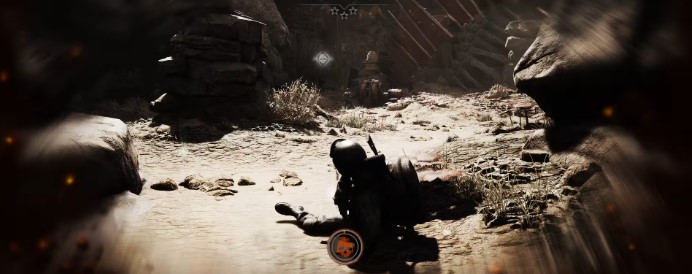
In addition to the main gameplay cycle, the game features a wide range of minigames. Slot machines are located throughout the locations, most of which utilize quick-time events (QTE) mechanics. There are also localized versions of simple arcade games, but three activities are the most notable.
- The card game “Massacre” is a variation of tic-tac-toe on a 3×3 board with sector interception.
- Fishing is a QTE mechanic. It looks odd due to a bug: fishing occurs in shallow puddles that you can run through.
- Slot machines (slots) are an opportunity to lose currency with a negligible chance of getting equipment.
Another important side element of PIONER is outpost construction. This is essential infrastructure for crafting, repairs, and teleportation. Without them, the game is uncomfortable.
The core content is raids for groups of three. They consist of enemy clearing, platforming sections, and boss battles. The basic tactic boils down to one player distracting the boss while the other two deal damage. Balance is questionable: regular enemies constantly join the bosses, turning the fight into chaos. If the group dies, the raid fails.
The current version has two dungeons: Bastion and Havenari Manufactory.
- “Manufacture”: An interesting set of objectives, but there are no rewards for completing them (only from the boss and hidden chests). The platforming is spoiled by anomaly spheres that deal damage and fly in unpredictable trajectories.
- Bastion: Takes longer, but has less content. It’s mostly walking through corridors and shooting. The boss (a giant beetle) is more challenging than both bosses in Manufacture: he constantly forces close combat and calls for reinforcements.
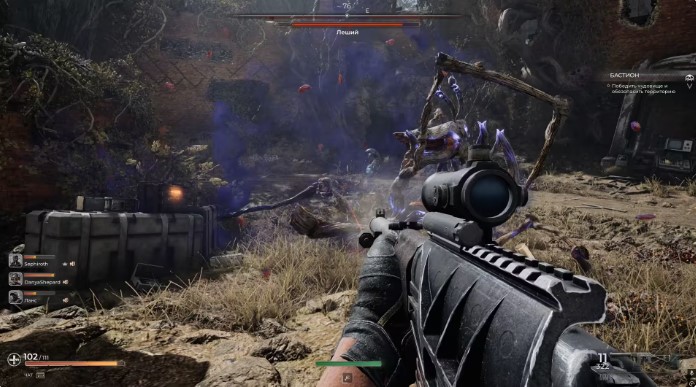
The in-game store rounds out the list of complaints. Cosmetics are already available for purchase in the early stages of development—the developers have found the resources to do so—but they still haven’t invested in fixing bugs. For example, sometimes changing a character’s outfit can result in the complete loss of equipment. This issue can only be resolved by restarting the game.
Diagnosis
PIONER’s early access launch was as many expected. The project essentially failed from the start. Attention to the game was built around scandals, not quality. The audience added the game to their wishlist, but this didn’t translate into a stable online presence upon release.
As a result, the community received a mediocre MMO that fades into the background among its competitors and risks going unnoticed by a wider audience. For a project with such ambitions and development timelines, this is tantamount to failure.
The community received a mediocre MMO that pales in comparison to its competitors. There’s no reason to believe the game will be “fixed.” PIONER lost its momentum even at the PR stage. It’s unknown internationally, and domestic promotion was accompanied by questionable decisions (including suspicions of wishlist manipulation by bots).
The developers may have believed in success, but the current state suggests otherwise. Today, PIONER is perceived as a clone of The Day Before that misled customers. The most honest solution would be to follow Fntastic’s lead: shutting down the servers and issuing full refunds. Supporting the game in its current form will only delay the inevitable.