More than 20 years have passed since the release of Half-Life 2, and the series still holds a firm position among the gaming industry’s most prominent players. After all these years, fans still believe Half-Life 3 will be released. This hope has been further fueled by statements from several trusted insiders: Half-Life 3 will be announced before the end of 2025! To understand the “hopium” phenomenon surrounding the third Half-Life game, we decided to remind everyone why gamers are dreaming of a sequel to Half-Life today—December 3, the third day of the week!
This article will take you back to Valve’s games: how they revolutionized their time, how they captivated players not only with their gameplay but also with their characters. Grab a snack—this article is going to be extensive!
Half-Life
The game opens in a way no other shooter has—by allowing you to get acquainted with the environment rather than immediately throwing you into the thick of battle. The player is placed in a mine cart, and for what seems like an eternity, they watch the interior of the Black Mesa research facility “fly by.” This flexing of muscle on the part of the developers perfectly evokes the scale of the theater of war where the events that follow will unfold.
The storytelling was also revolutionary. Previously, shooters had limited themselves to a summary or a short cutscene, and then sent players off to shoot virtual enemies. Half-Life allowed players to form their own opinions through their surroundings—listening to military radio transmissions, reading their graffiti on the walls, or observing the growing alien infestation within Black Mesa as they progressed.
The emphasis on the main character being a silent protagonist was cleverly placed—all conversations are structured so that the player doesn’t feel uncomfortable with their character remaining silent while explaining the next task. This was done so effectively that for many years to come, developers continued to feature silent protagonists in their games—imitating Gordon Freeman and Valve’s masterpiece—even when it was inappropriate.
The hero himself proved revolutionary for the genre. Before Half-Life, protagonists were machines of destruction. These included Duke Nukem, Caleb from Blood, and Doomguy. But this time, the player assumed the role of a silent theoretical physicist who solved problems using ingenuity, skill, and a massive arsenal of weapons. Many found it odd that instead of the usual muscular man, they were given a weakling in glasses. But the “weakling” character stood the test of time, and without a word, Gordon Freeman became one of the most recognizable gaming characters—and remains a leader to this day.
The plot steadily increases its epic intensity. The deceptive calm of the first chapter ends when disaster strikes and Black Mesa is overrun by aggressive aliens. Gordon goes to the surface for help and encounters soldiers responding to an alarm from the base. In other games, the soldiers would have helped, but here they are ordered to eliminate witnesses to the failed experiment, forcing them to resort to self-defense, with lethal (for the soldiers) consequences. Then the aliens appear, fighting not only Freeman but also other humans. And somewhere in between, wander the scientists and security guards, unwitting victims of the incident.
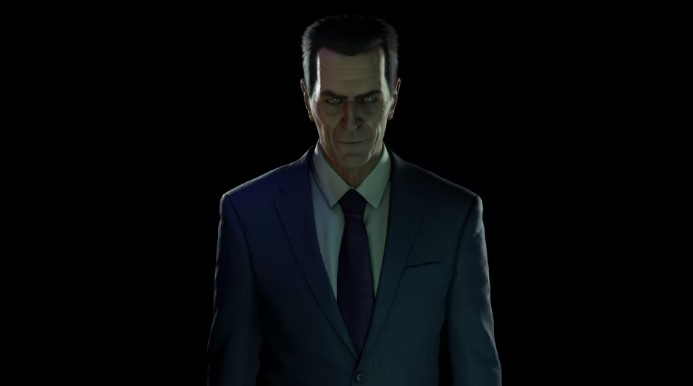
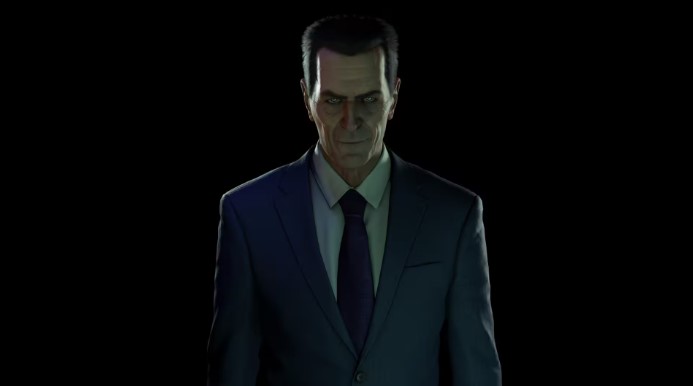
Lurking amid this chaos is the mysterious G-Man—a character with a briefcase who could be spotted in various places throughout the game. He’s been monitoring Gordon and his actions and finds him extremely interesting—his skills could be useful to the G-Man’s “employers.” Therefore, the “bureaucrat with a briefcase” offers Freeman a deal: either he accepts the new contract or perishes. This all occurs after a battle with the final giant boss, Nihil, who controls the aliens, after which Gordon is marinated in stasis by the G-Man’s “employers” until the next game.
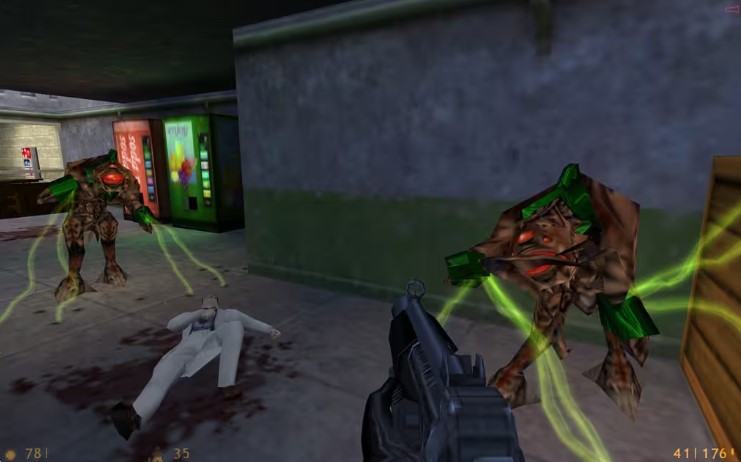
With each playthrough, you notice new details: enemies fighting each other; a stealth system; monsters devouring corpses. If you seriously wound the Vortigaunts or kill their overseers, they stop fighting. You learn that enemies can sleep and react to sound and smell. The madmen at Valve imbued both the cockroaches fleeing from the light and the soldiers attacking the protagonist with remarkable intelligence.
Half-Life has another peculiarity that only the most persistent players can discover: Valve has so thoroughly thought through—or failed to think through—the game’s location design that a little “cheating” makes the project even more interesting. After some time, gamers began sharing new ways to navigate the game: moving through levels at incredible speeds using “hop-boom”; ignoring elevators and finding their own paths to new levels; taking shortcuts using wall and remote mines; rescuing scientists who couldn’t be saved by legitimate means—and thereby breaking the script’s logic. None of this has been fixed yet, not because Valve doesn’t care about its games, but because it’s fun. And fun was the main component that Gabe Newell personally wanted to see in Half-Life.
Even the arsenal of weapons featured in Half-Life allows for creative and daring fun throughout the game:
- The Glock 17 pistol lets you understand that you can now shoot at enemy body parts, rather than directly at them (as in DOOM or Blood)—and the bodies will react to every hit. And how does that sound!
- The shotgun is a typical workhorse for shooters of the era. If it weren’t for the ability to double-shot, it wouldn’t stand out from the crowd—but that little extra detail makes a big difference;
- The MP5 is a special case—it would be a decent submachine gun if it weren’t for the underbarrel grenade launcher. Blowing up a crowd with a single, well-aimed grenade is an incredibly satisfying feeling! However, the MP5’s special charm comes from the crosshairs, which I absolutely fell in love with—no one had ever made crosshairs like that before Half-Life;
- The revolver is one of the most powerful guns in the game, and it doesn’t have a lot of ammo. It’s accurate and deadly, so, as per tradition, I kept it until the very end of the playthrough;
- Explosives are a different matter. You remember their existence when you need to distract tentacles (giant aliens, not the faithful companions of Japanese cartoons), deal with snipers, or blow up two soldiers standing behind Gordon—those who’ve completed the game will immediately recall this moment. Otherwise, you either need to deliberately set traps with wall mines or figure out how to herd all the soldiers into a single crowd to blow them up. More memorable are the red bugs called snarks, which you use as living grenades—these little creatures bite enemies and explode upon contact;
- Valve is trying hard to make players believe that the game’s symbol is a crowbar. But that’s not true, as you spend most of the game using it as a crate opener. The real symbol is the Tau Cannon! This prototype deals high damage, and a charged shot can take down helicopters. It also opens up parkour opportunities thanks to its recoil—it’s so powerful that in the world of Xen, you can use it to fly between islands.
- The rocket launcher itself is great. But what makes it memorable is the ability to aim rockets at targets using a scope—something players hadn’t seen before in Half-Life!
Half-Life: Opposing Force
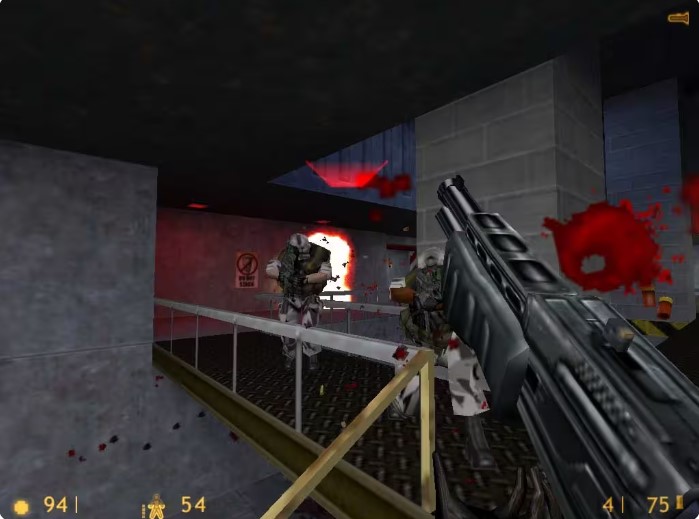
This time, the player will witness the same incident, but this time as Adrian Shephard, a HECU soldier who enthusiastically shot Black Mesa scientists. However, Shephard wasn’t ordered to eliminate the witnesses, making him far more heroic than his overzealous comrades. The player is free to shoot any “eggheads” or guards they encounter, but such behavior would be counter to the narrative. Adrian, like Gordon, is trying to figure out what’s happening at Black Mesa and escape this hell.
Unlike the original, Opposing Force is designed for a more aggressive playstyle. Shepard is periodically joined by comrades who can provide fire support, open doors, and heal. The main difference is the introduction of new enemies in the form of the X race—fortunately, non-canon.
In movies, such a disaster would be dealt with by a team of trained specialists. Or the focus would be on a lone hero who managed to survive and prevail. In Half-Life, several characters were simultaneously engaged in this: Black Mesa employees, including Gordon Freeman; HECU soldiers and Shepard; “black ops” (a group of highly skilled assassins with their own distinct missions); two independent alien factions—the Xen invaders and the X-race. And most importantly, all these factions were doing everything in their power to destroy each other! As in the original Half-Life, the war between them unfolds right before the player’s eyes.
The protagonist’s arsenal has undergone changes:
- A knife is a less fashionable version of a crowbar. Selecting a more convenient wrench ultimately transforms it into a drawer opener;
- Sniper Rifle: A more useful alternative to the tranquilizer crossbow from the original Half-Life;
- Machine gun: powerful, simple and pleasant to use;
- Spore Launcher: An alien hesotsan that needs to be fed with ammo. You’ll remember it for its cute design;
- Transporter: you can point it at an undesirable enemy and teleport them away. Or you can try your luck and teleport yourself. Where? Well… You’ll find out for yourself;
- The shock cockroach—you forget about it as quickly as a tame beehive. It’s nothing compared to the cute snarks;
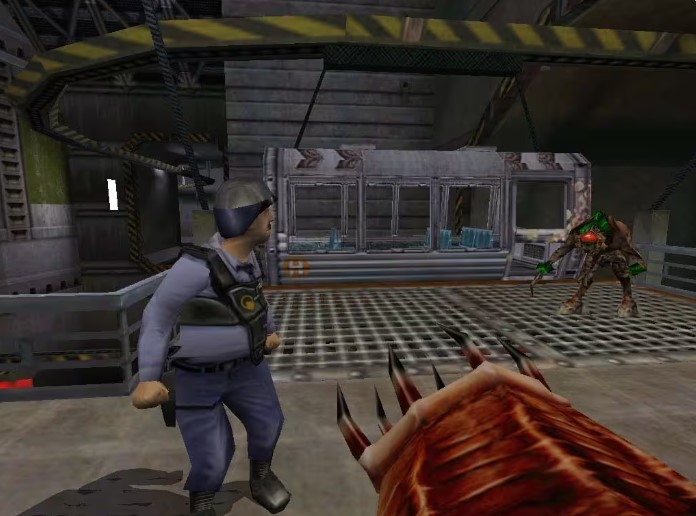
- But what’s even more interesting is that Shepard managed to stick his hand into a barnacle! An alien that snatches its prey with its long tongue. And he survived! And not into its mouth, but into… well, another orifice! Thanks to Adrian’s bravery, Opposing Force featured one of the first grappling hooks in video game history!
Half-Life: Blue Shift
Compared to the original and Opposing Force, Blue Shift takes very little time to complete. However, the expansion offers a unique experience.
In the add-on, you play as Barney Calhoun, an ordinary security guard at Black Mesa. Initially, he, like all security guards, is treated as a faceless, serviceable member of staff. However, after the disaster, the scientists’ opinions changed. The former servant and butt of ridicule became the only hope for salvation. As Barney led the scientists out of the research facility, he became known as “Mr. Calhoun,” emphasizing the importance of the player’s achievements.
Even though the arsenal was seriously cut back, and the G-Man doesn’t even bother to marinate the protagonist, as he previously did with Freeman and Shepard, Blue Shift is an excellent example of how to show the same event from different points of view.
Half-Life: Decay
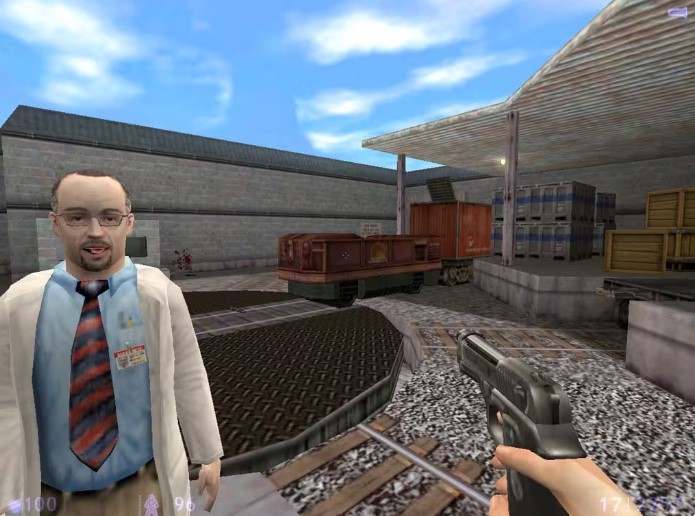
A co-op game about two Black Mesa employees who, through their actions, pave the way for Gordon Freeman to victory. Players had to tackle tasks that required teamwork—all in split-screen mode.
Half-Life: Decay takes place parallel to the original game, with you taking control of Doctors Gina Cross and Colette Green, who, under the direction of Doctor Keller, are attempting to repair the aftermath of the Black Mesa disaster. It was these two heroes who delivered the test crystal sample that caused the Resonance Cascade, and after the incident, they were the first to escort Doctor Rosenberg to the surface to call the military, unaware of their orders to clear the facility. Over the course of the game, Gina and Colette not only fend off aliens and HECU soldiers but also complete a critical mission—setting up the launch equipment for a satellite that Gordon Freeman will later activate. Finally, they successfully stabilize a spatial rift with a displacement beacon, preventing the Earth from being completely consumed by the world of Xen.
Half-Life: Decay proved too innovative for its time. It was also released exclusively on PlayStation 2—to this day, it has never made it to Steam. Few people know about this game, and even fewer have played it. But if it had been released during the time of Portal 2, when Valve set a new standard for co-op games, the result would have been completely different.
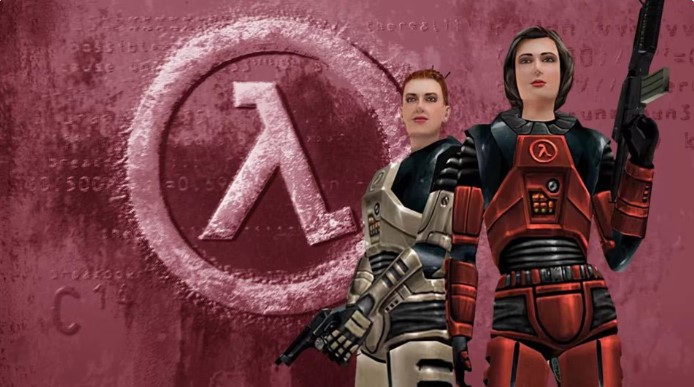
Black Mesa
And since we’re still talking about the events of the first Half-Life, we can’t help but mention its fan remake, which Valve itself has declared canonical! It’s a fully-fledged new game that has improved many aspects of the beloved Half-Life 1, while retaining the same plot, characters, and level design.
But most importantly, the developers have thoroughly tweaked the difficulty—Gordon Freeman now takes damage even in skirmishes where he would never have in the original. Even the rare battles early in the story have become life-or-death struggles. This perfectly complements the atmosphere—our physicist isn’t a soldier or a trained killer, but an ordinary worker caught in circumstances orchestrated by a higher power.
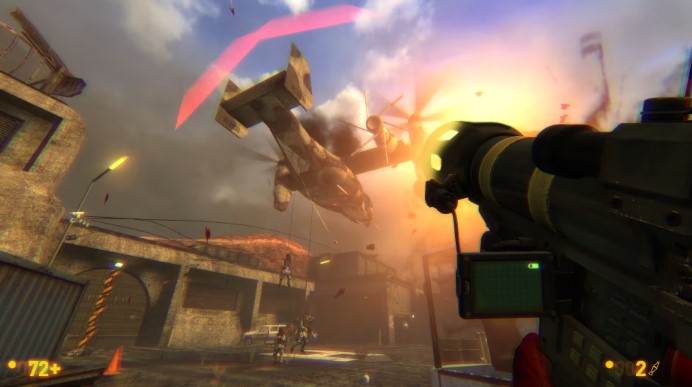
The arsenal has also been reworked. You can no longer use mines as ladders; shoot down a helicopter with a Tau Cannon; or kill a Gargantua (a biological alien tank) with explosives. The fun, as they say, has diminished: “No, Gordon. Your arsenal was always intended for use only. You’ve lost your mind; you can’t jump over mines like ledges!”
However, Black Mesa is still a successful example of a perfect remake, one that didn’t break or rewrite the core events, allowing players to relive a beloved story and experience new, incomparable emotions. Although not always positive for those who have been torturing Half-Life for decades, seeking out new ways to have fun.
Half-Life 2
According to the plot, the Black Mesa incident was exploited by another alien faction, the Combine. Within just seven hours of the invasion, the invaders enslaved Earth and turned human life into hell. Reproduction was prohibited, and the desire to procreate was reduced by a special suppression field. Drugs were laced into food, breaking people’s will to resist. By the time the second part begins, the Combine had been actively draining Earth’s resources and sending them to their own worlds for 20 years. The population, meanwhile, was forced to exist under constant surveillance and intimidation, and some even resigned themselves to this fate.
The game begins with Gordon Freeman being brought back to his senses by the G-Man in this terrifying new world—the Combine capital of City 17. Thanks to old acquaintances—Barry Calhoun, Isaac Kleiner, and Eli Vance from the first game—the hero manages to contact the Resistance, which helped launch the process of liberating Earth from the invaders. A surprise is the appearance of Vortigaunts among the resistance fighters—in the first game, they were cowardly aliens under Nihil’s thumb, attacking Gordon with lightning bolts, and now they have joined forces with humanity.
Playing through the second game offered a new experience. In the first game, players had to navigate the unsettling corridors of Black Mesa, familiar to Gordon Freeman. Now, the world belongs to alien invaders. Throughout Half-Life 2, players often have to escape them in open spaces, which unwittingly led some to bouts of agoraphobia.
In fact, the space was so vast that only experienced players, using hop-ups or other engine-powered acceleration, were able to navigate it on foot. Everyone else, including me, had to use vehicles, which turned into epic chases and shootouts—from hovercraft to buggies cobbled together from various scraps. On the water, Gordon was pursued by an Alliance harvester helicopter, and on land, by hatched antlions—giant alien insects that respond to vibrations and pheromones.
Half-Life 2’s story also deserves praise for the fact that the writers avoided the tired cliché. Gordon Freeman could have been blamed for all the troubles—for causing the initial invasion or for working for the G-Man. And the player, in the shoes of a theoretical physicist, would have had to prove to everyone that only hard-boiled eggs are tougher than him. But instead, the emphasis was placed on his accomplishments, which make the Resistance members willing to follow the doctor to the grave. For the same reason, humanity’s enemies take his appearance so seriously, dedicating numerous platoons and even an entire helicopter to his elimination. They know that if Gordon gets to them, his crowbar will destroy everything they’ve worked so hard to build on Earth.
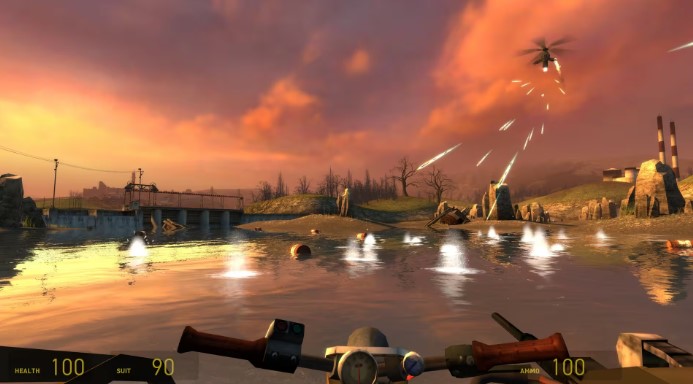
The second Half-Life was visually stunning. At first glance, the graphics and character animations overwhelmed players—the euphoria of high-quality graphics and relatively modest computer requirements was unparalleled at the time. The moment I saw Half-Life 2 at launch, I realized the future of the gaming industry had arrived.
This “future” was even reflected in the fact that players encountered a previously unseen problem—it was called Steam. After installation, the game required an internet connection, registration in some obscure application, and a lengthy download of updates… It goes without saying that not everyone at the time had the luxury of a stable, and most importantly, fast, internet connection! Players had to spend nights downloading the latest patches and ensuring a stable connection. Otherwise, they had to start all over again.
Yes, the problem was solved. By purchasing… a less-than-licensed version from a junkyard or basement with the words “CD/DVD/FILM/MUSIC/GAMES” written on it. However, most of these discs were notorious for a bug that would freeze all characters—the scripts simply refused to work. In my case, the bug was caused by any save loading. I still remember having to complete Half-Life 2 in one go without dying!
The Russian translation deserves special mention. I ran into a problem while traversing the dreaded town of Ravenholm, where the only remaining inhabitant was the crazed Father Grigori. In the original, Father Grigori said, “Tread lightly, for this is hallowed ground,” which literally means “Tread carefully on hallowed ground.” However, the phrase was translated as “Tread calmly, for this ground is hallowed.”
“Now this nightmare is finally over and I can relax!” I thought. At that very moment, a group of fast zombies tried to bite off Gordon’s Freeman, who was under my control. Truly terrifying memories!
A few years later, I purchased a license, and the localization was significantly worse—the Russian translation of Half-Life 2 is a whole other topic for discussion. There were huge pauses between lines, apparently due to the peculiar workings of the Source engine, and the acting was far worse.
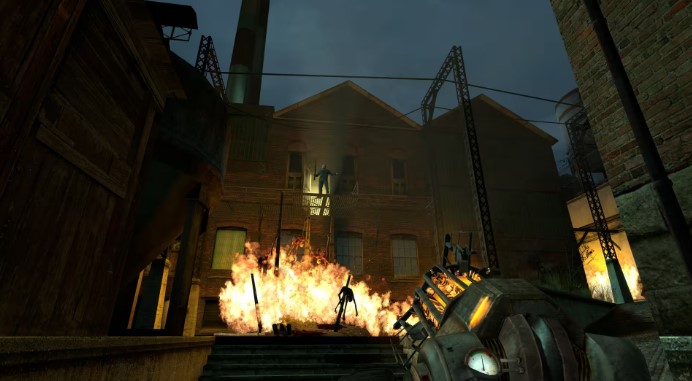
But why are we always dwelling on the negatives? The new arsenal is significantly different from its counterparts in other shooters and even from the first games in the series.
The weapons were given out in such a way that players would associate them with a specific segment of the game. The pistol and submachine gun evoke those first firefights with Earth’s civil defense; the shotgun brings to mind Ravenholm and sniping zombies; the pulse rifle evokes those first encounters with the Combine and the beach. The revolver is accurate and powerful, but I once again saved my ammo until the very end.
The gravity gun stands out, picking up objects and launching them at enemies at incredible speed. It’s another flex of muscle and an attempt to demonstrate how the Source engine’s physics work. Essentially, it’s a developer tool that’s been turned into a weapon within the universe, simply because… It’s fun! The creators did everything possible to encourage players to use the gravity gun in Ravenholm, reducing the number of ammo pickups and increasing the number of environmental objects, like saws, red barrels, and gas cylinders. However, at the time, I stubbornly ignored it because… Fear. After all, while you’re picking up an object, aiming, and launching it, a zombie might approach and attack. And it was incredibly scary—the visuals back then were more striking than any cinematic game from 2025.
It was only the achievement awarded for completing Ravenholm with only a gravity gun that changed my mind about it—the gravity gun is one of the best weapons in the gaming industry!
Gordon Freeman’s crowbar is still considered the symbol of Half-Life among fans, but for me, it’s once again an outlier. Because there’s nothing better than firing red-hot rebar that pins enemies to surfaces! Nothing quite captures the resistance’s hatred of the alien invaders like a crossbow. And the whole point of Half-Life 2 is the fight for humanity’s freedom against the invaders. And the Combine harvesters pinned to the walls along Gordon Freeman’s route to the Citadel in the center of City 17 are a perfect demonstration of the relationship between the Combine and humans!
Half-Life 2: Episode 1 and Episode 2
Two expansions to the second part, positioning themselves as separate, smaller games within the universe. The first episode isn’t particularly long or intense, but, as with Blue Shift, it has its strengths. Gordon Freeman was allowed to play through it entirely in the company of the charming Alyx Vance, Eli’s daughter, and strengthen his bond with her. And that’s worth a lot!
In Half-Life 2: Episode One, the story of Gordon Freeman and Alyx Vance continues immediately after the explosion in the Citadel, where they are rescued by Vortigaunts. However, the heroes are forced to return to the unstable Citadel to slow its destruction and give the residents of City 17 time to evacuate. After successfully escaping the city by train, at the beginning of Episode Two, they crash and continue on to the rebel forest base of White Forest.
Their main goal is to deliver data stolen from the Combine that will help close the superportal forming over the ruins of City 17. After a difficult journey, during which Alyx is seriously injured, they reach the base and help launch a missile that neutralizes the portal.
And during the gameplay, the developers perfectly demonstrated that all the efforts of Gordon and the Resistance members up to this point had borne fruit—the Alliance engages you in a final battle, gathering its remaining forces for a suicidal attack. And at that moment, you realize you’ve managed to cripple this merciless alien machine. All that remains now is to finish it off.
However, the second episode isn’t famous for its happy ending—it ends on a tragic note, with the death of one of the key characters. It’s also because it’s where the entire Half-Life story, which gave rise to the cult following of the third installment, ends! Well, almost.
Half-Life: Alyx
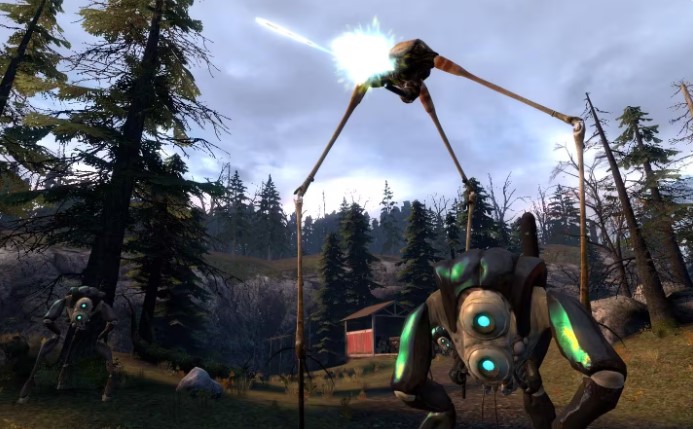
One of the most important moments in Half-Life 2 is the first meeting with Alyx Vance, when she saved Gordon from a Civil Defense raid.
Alyx can be considered the epitome of a strong female character. Her smile became the first bright memory in the grim City 17. Over the course of the game, she proved herself a skilled fighter and a helpful companion. She lightens dark moments with her jokes, and when she’s scared, she’s not afraid to show weakness. That’s why when Gordon saves Alyx, her gratitude is so sweet—it comes from a strong person saying “thank you” as an equal.
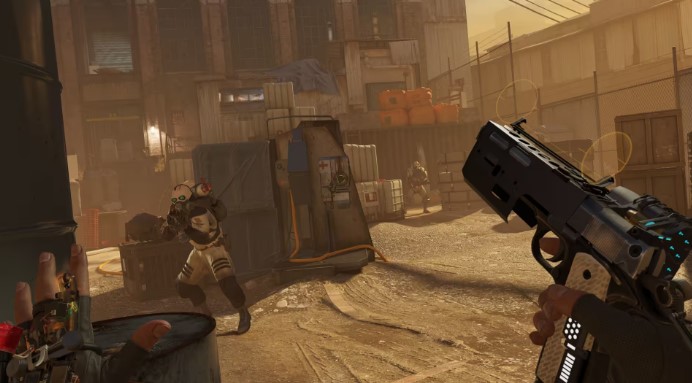
All these qualities made her a more than worthy candidate for the role of the protagonist in the new game. And Valve wouldn’t be Valve without another breakthrough – Half-Life: Alyx set the bar for virtual reality. This allowed players to fully immerse themselves in the heroine’s role. Through her, they shot down Combine soldiers in City 17 five years before the events of Half-Life 2. The goal of the game was to rescue her kidnapped father and help establish a staging area for the return of Gordon Freeman – a legendary hero from the past whom the girl had not yet met.
Like Half-Life 2: Episode 2, Half-Life: Alyx ends on a dramatic cliffhanger, with its beloved heroine in danger. But what’s significant about this game is that, released 12.5 years later, it rewrote the ending of Episode II. Alyx, who lost her own father at the end of Episode II, decides to make a contract with the G-Man: he prevents this from happening, but Alyx becomes his new hired hand. After all, Dr. Freeman has proven unreliable, and the bureaucrat with the briefcase’s “employers” do not tolerate disobedience.
Half-Life 3?
I hope I’ve managed to capture the sense of emotion and nostalgia that is so characteristic of the Half-Life series.
Now you understand that the third installment is so highly anticipated not only because of the continuation of the story and the expansion of the universe. Each Half-Life game has stood out for its uniqueness: stunning graphics and, at the same time, superb optimization even on low-end systems; a groundbreaking plot for its time, where the protagonist was part of the world, not just a killing machine; and because every game in the series was simply… Fun to play.
The swirling rumors about the announcement of Half-Life 3 only add fuel to the smoldering embers of hope simmering in the hearts of fans—perhaps 2025 will be remembered not only for the abundance of masterpieces, but also for the year in which Valve announced a game with the number 3 in its title?
Such a possibility can never be ruled out… Don’t you think so, Mr. Freeman?