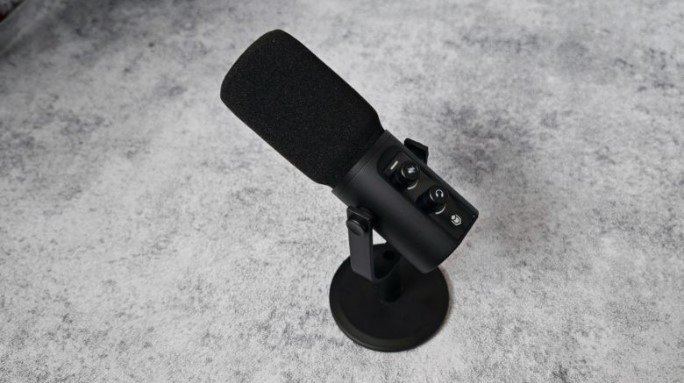
Domestic brand IO, known for high-quality and affordable gaming mice, keyboards, and headphones, has expanded its product line with a microphone simply named IO Mike. We’ll explore the capabilities of this new product, priced at just 2,999 rubles, in our review.
Technical specifications
- Type: dynamic
- Frequency range: 50 Hz – 16 kHz
- Bitrate: 24 bit
- Sampling frequency: 192 kHz
- Polar patterns: cardioid
- Sensitivity: 49 dB
- Signal-to-noise ratio: 0 to 36 dB
- Connection interface: USB Type-C, XLR
- Weight: 900 g
- Features: metal case, two types of connection, backlight
Equipment and design
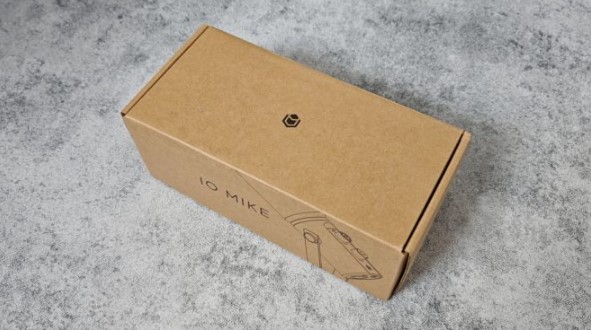
IO Mike is packaged in a box made of unpainted cardboard, with the brand logo, name and image of the model, as well as a list of its characteristics printed on the sides.
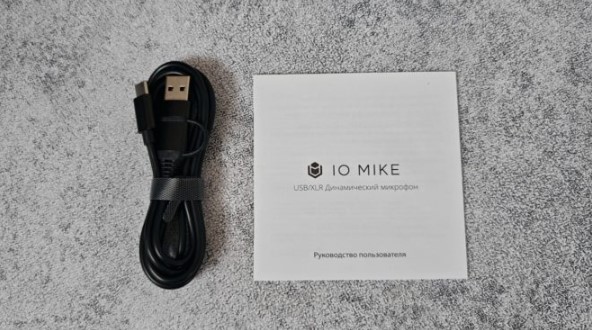
Inside is a foam mold housing the microphone. The owner will also find a USB-A to USB-C (USB-C to USB-C) cable and a quick start guide in Russian.
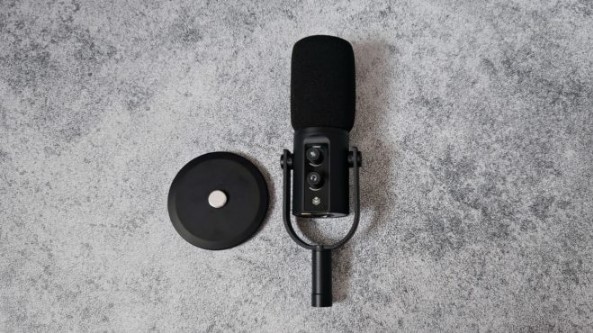
Out of the box, the microphone is mounted on a wide, heavy stand, ensuring stability in any position. A soft pad at the base dampens vibrations. If necessary, the body can be easily removed from the stand to attach the device to a pantograph or tripod—a universal mount makes this effortless.
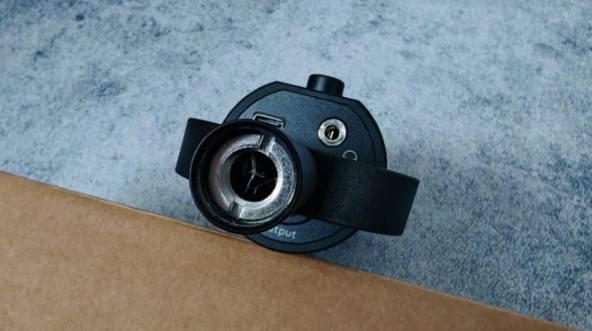
Conveniently, the stand features a threaded adapter, offering two diameters—3/8″ and 5/8″—for better compatibility with third-party stands. This allows you to place the microphone anywhere—right in front of you on a table or on a flexible arm—and you’ll always be comfortable using the device.
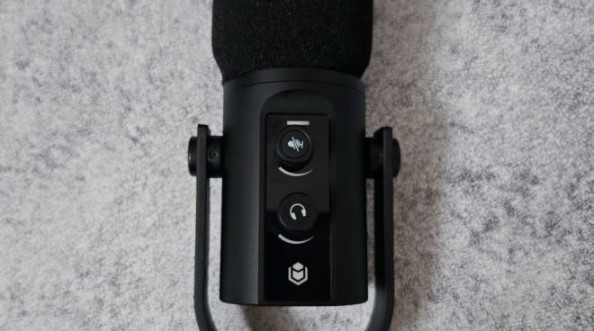
The controls are located on the front of the case. The upper roller controls volume when rotated, on/off with a short tap, and noise cancellation with a long tap. The indicator above the roller lights up in a corresponding color: green, red, or blue. The lower roller adjusts the headphone volume .
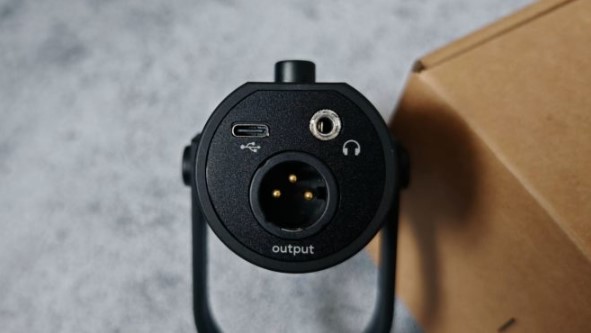
The bottom edge houses a 3.5mm headphone jack, a USB-C port, and an XLR connector. IO has made this microphone appealing to both amateurs and professionals: USB-C is plug-and-play, meaning the device is ready to use immediately after connection , while XLR is suitable for studio recording, transmitting audio without any pre-processing.
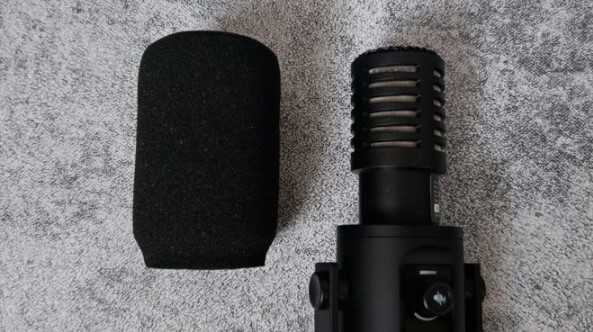
The capsule is covered by a massive pop filter. The cardioid pattern captures sound directly in front of the capsule, ignoring sounds behind and to the sides, so it’s important to position the microphone correctly—directly toward the speaker, not up or to the side.
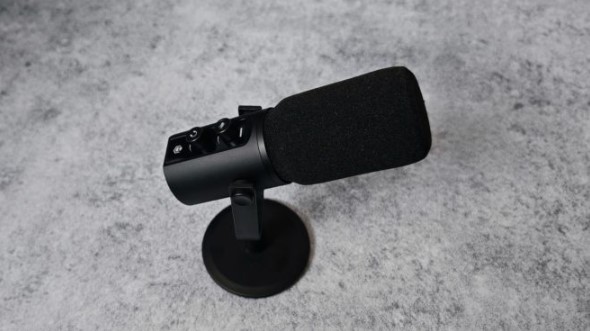
The IO Mike makes a positive impression. The microphone looks solid, clearly more expensive than its price. The use of metal only enhances this impression. The device would look right at home in a podcast or live stream .
Features and impressions
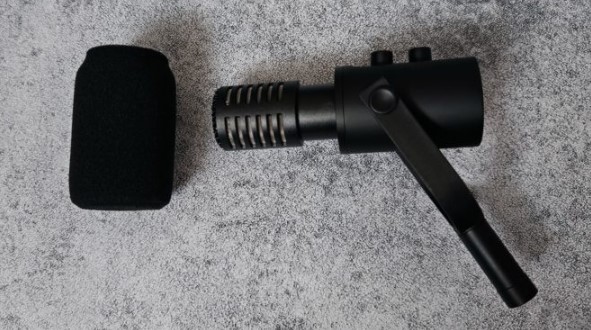
The microphone doesn’t require any drivers or software: just plug it in and you’re ready to go. You can use either a standard USB-C interface or an XLR input for professionals with an audio interface. Furthermore, the device can record to two channels simultaneously, which can be useful for a number of scenarios.
IO Mike records at 24-bit/192 kHz, capturing detail perfectly without distortion or interference. The frequency range is 50 Hz to 20 kHz, ensuring voices remain vibrant and every nuance is accurately conveyed, whether it’s deep bass, clear mids, or highs. A gain range of up to +36 dB allows for easy volume control, whether you’re filming ASMR videos or, conversely, want to scream into the microphone. The 3.5 mm output allows you to listen to your audio directly while recording, without latency.
As noted above, the cardioid pattern picks up sounds from the front while rejecting other directions. Pointing the microphone directly at the speaker will filter out other distracting noise, such as computer noise, traffic outside, and so on.
During testing, the IO Mike performed excellently. Voice reproduction is natural, with no noticeable frequency imbalance. Volume is smoothly adjustable, and control nuances are captured instantly . At maximum gain, a slight kick effect can occur, but this is typical of all inexpensive microphones, and the one we reviewed is far from the worst in this regard.
Conclusion
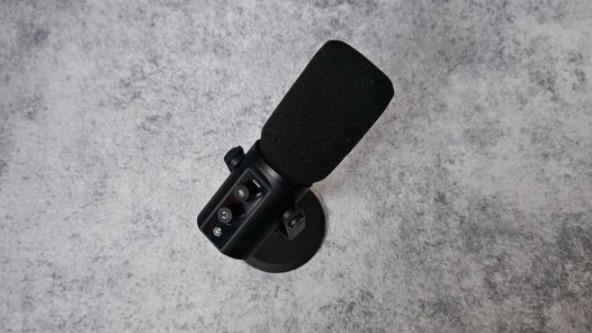
IO notes that the new product was developed with the goal of creating a microphone for those who want clear and rich sound but don’t want to spend half their salary on a device. The model is suitable for streamers and bloggers, musicians and vocalists, and even ordinary users who want to improve voice transmission during calls.
The IO Mike’s key advantage is its affordable price, but it’s also worth noting the high quality of both the microphone itself and the recording. It doesn’t feel like the manufacturer cut corners in creating the device for its low price. There are a few drawbacks, though, including the stand, which isn’t high enough, and the occasional “kick drum” effect at maximum gain. The decision is ultimately yours, but we think it’s a worthy choice.
- Neat design
- Convenient control
- High quality recording
- Versatility of connection
- Low stand